
Blog
View all

Product
How to run CockroachDB on IBM S/390 and ARM64
There are occasions in which businesses need their database to fit into unusual production environments for specific use cases. In this blog, we’ll push the boundaries and test whether CockroachDB can work and thrive in new and unusual places, such as: • On an IBM Mainframe • On an ARM64 CPU

Jeffrey White
August 30, 2022

Engineering
VLDB 2022: CockroachDB engineers present "A Demonstration of Multi-Region CockroachDB"
The latest research paper from CockroachDB’s engineering team, “A Demonstration of Multi-Region CockroachDB”, will appear in the Demonstration Track of the VLDB 2022 conference in Sydney, Australia (as well as remotely), on September 5-9. This paper complements our recent full paper, Enabling the Next Generation of Multi-Region Applications with CockroachDB, which appeared earlier this year in SIGMOD 2022.

Rebecca Taft
August 26, 2022
Product
How to lower p99 latency by geo-partitioning data
Running a geographically distributed database has a lot of benefits. We see enterprise companies, startups, and students choose distributed databases for reliability, scalability, and even security. But many distributed databases come at a serious cost: latency. Distributing nodes across the globe means your data will need to travel from one node to the other. By its very definition, distribution creates latency. Geo-partitioning your data in CockroachDB makes it easy to minimize that latency. We believe you shouldn’t have to sacrifice the benefits of a distributed database to achieve impressive throughput and low latency. With geo-partitioning, we can minimize latency by minimizing the distance between where SQL queries are issued and where the data to satisfy those queries resides.
Charlotte Dillon
August 25, 2022

Design
A modern approach to test data management and data masking
It was around the year 2010 when a customer of mine implemented data governance software and policies around the data within their production database. They put in the effort to ensure that their production data and systems were protected from prying eyes of a hacker and the treacherous fingers of an unscrupulous software programmer. However, they left their development and test database environments relatively alone with little to no data controls in place. Worse yet, they extracted production data to be used in development. Then a breach occurred in their development environment (you know, the one with production data). The breach resulted in millions of records containing credit card information and customer information being stolen. The result was a multi-million dollar fine.

Jeff Carlson
August 24, 2022

Engineering
How to use indexes for better workload performance
Indexes are a crucial part of your database schema. They improve workload performance by helping the database locate data without having to scan every row of a table. Although it might be tempting to create an index for every column that your workload uses to filter data, it’s important to consider the performance tradeoffs of indexes. While indexes greatly improve the performance of read queries that use filters, they do come with a cost to write performance: data has to be written for all indexes present on the table.

Marylia Gutierrez
August 23, 2022

Product
How Netflix builds the infrastructure to stream on every device
The details in this post are based on The Netflix Tech Blog post titled “Towards a Reliable Device Management Platform”. The Media & Entertainment (M&E) industry is extremely profitable – it has raked in billions of dollars each year for the last several years. The U.S. M&E industry is the largest in the world, valued at $660 billion (of the $2 trillion global market) despite seeing a 7.3% year-on-year decline in 2020 due to the pandemic. While the pandemic accelerated existing trends (i.e. the streaming subscription model), it halted others (i.e. box office sales). Many M&E companies had to pivot their business model to stay competitive. For example, we saw several studios release first-run movies directly to streaming services, which allowed them to expand to an even larger audience. The M&E industry is on the rebound from 2020, and major players are figuring out new ways to build relationships with customers that last years, not weeks. One thing that’s been clear is the importance of creating an agile business model that allows you to iterate on new ideas and quickly adapt to market changes driven by customer demands.

Cassie McAllister
August 18, 2022
Product
AWS vs. GCP vs. Azure: Which cloud is best-priced for OLTP workloads?
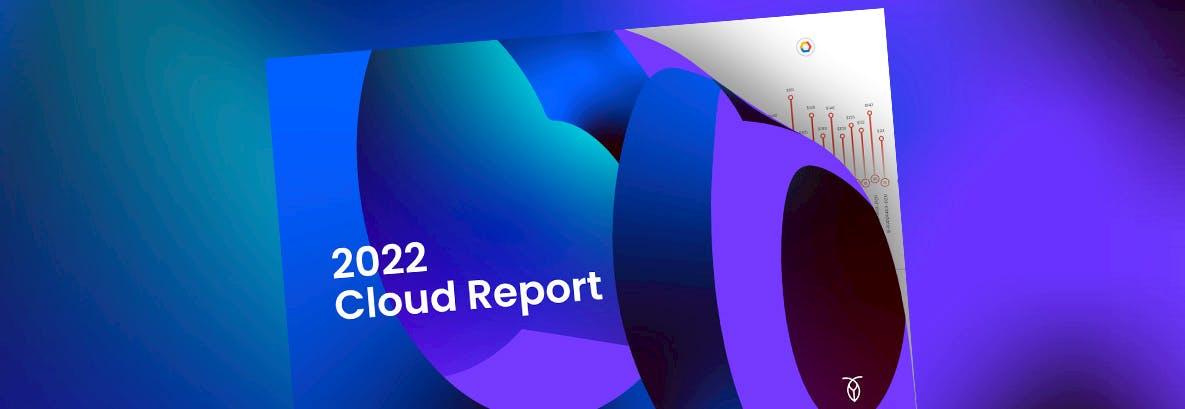
Trying to choose between the three main public cloud providers – AWS, GCP, and Azure – isn’t easy. There are a lot of factors to consider, and no single cloud provider is going to be the best option for every use case. When it comes to running OLTP workloads, though, we wanted to see if any of the clouds stood out in terms of price for performance. In our 2022 Cloud Report, we ran extensive testing on 56 different instance types across the three clouds to answer that question for our customers.

Charlie Custer
August 12, 2022

Case Studies
Scale & Resilience
Media & Streaming
How a high-availability database empowers Mux to scale video
It’s the second half of a tense semifinal in the World Cup. England, who haven’t won the tournament in half a century, are deadlocked with Croatia at 1-1, and time is ebbing away. The pressure is mounting.
Charlie Custer
August 4, 2022

Product
Engineering
SQL query tuning with DB Console
Observability is how you understand the current state of your database: how it is behaving, plus any potentially problematic things you should be paying attention to — and identifying improvements based on this information.
Marylia Gutierrez
August 1, 2022
Get started for free